
At GZO Spital Wetzikon, Dr. med. Magdalena Biraima and Dr. med. Marius Arbogast work with an established bariatric surgery program. Dr. med. Biraima-Steinemann, Head of the Department of Surgery and Chief Physician, is a recognized expert in complex obesity and weight-loss surgery. She works alongside Dr. med. Marius Arbogast, Board-certified General Surgeon with expertise in bariatric surgery.
The team approached DEO.care for a broader review of how it organized its operating room days. The goal was to understand where scheduling and workflow changes could make the surgical days more predictable.
How case mix shaped the surgical day
DEO.care carried out baseline measurements across two surgery days and built a process digital twin. The analysis highlighted considerable variation in skin-to-skin times across procedures of different types and complexity. On one observed day with four procedures of mixed complexities, these times ranged from 101 to 213 minutes. The surgical day ran from 07:00 to 16:50.
The variation made it difficult to reliably predict how the sequence of cases would progress or when the day would end. It also complicated decisions about when to cue the team to start preparing the next patient for surgery.
Could grouping procedures make the day more predictable?
Together with the surgical team, DEO.care explored grouping procedures with more predictable durations into dedicated operating days. Sleeve gastrectomy and gastric bypass procedures showed as suitable candidates with more predictable skin-to-skin times than more complex or revisional cases.
The digital twin projected that a dedicated day of four sleeve gastrectomy procedures could finish by 12:19. This was four hours and thirty-one minutes earlier than the observed mixed-complexity day.
From simulation to the operating room floor
The surgical team then tested a first dedicated sleeve gastrectomy day and completed four procedures by noon.
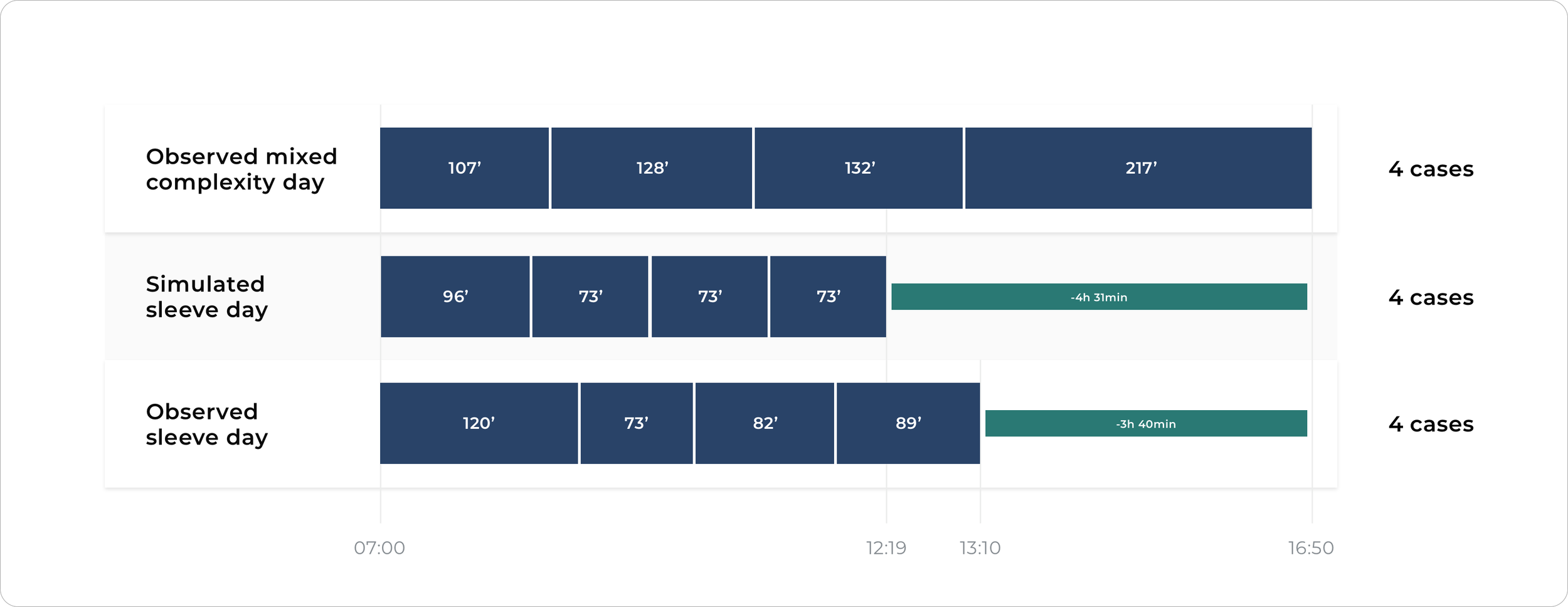
Observed mixed-complexity day compared with the simulated and observed dedicated sleeve gastrectomy days. Source: DEO.care digital twin analysis, GZO Spital Wetzikon.
The dedicated day format also revealed a set of further gains beyond the earlier finish:
Less process variability across most stages of the workflow.
Shorter changeover times between cases.
Reduced time spent in the induction room.
The earlier finish allows the surgical team to schedule additional cases before the operating room's typical closure at 15:30.
Rethinking how surgical days are organized
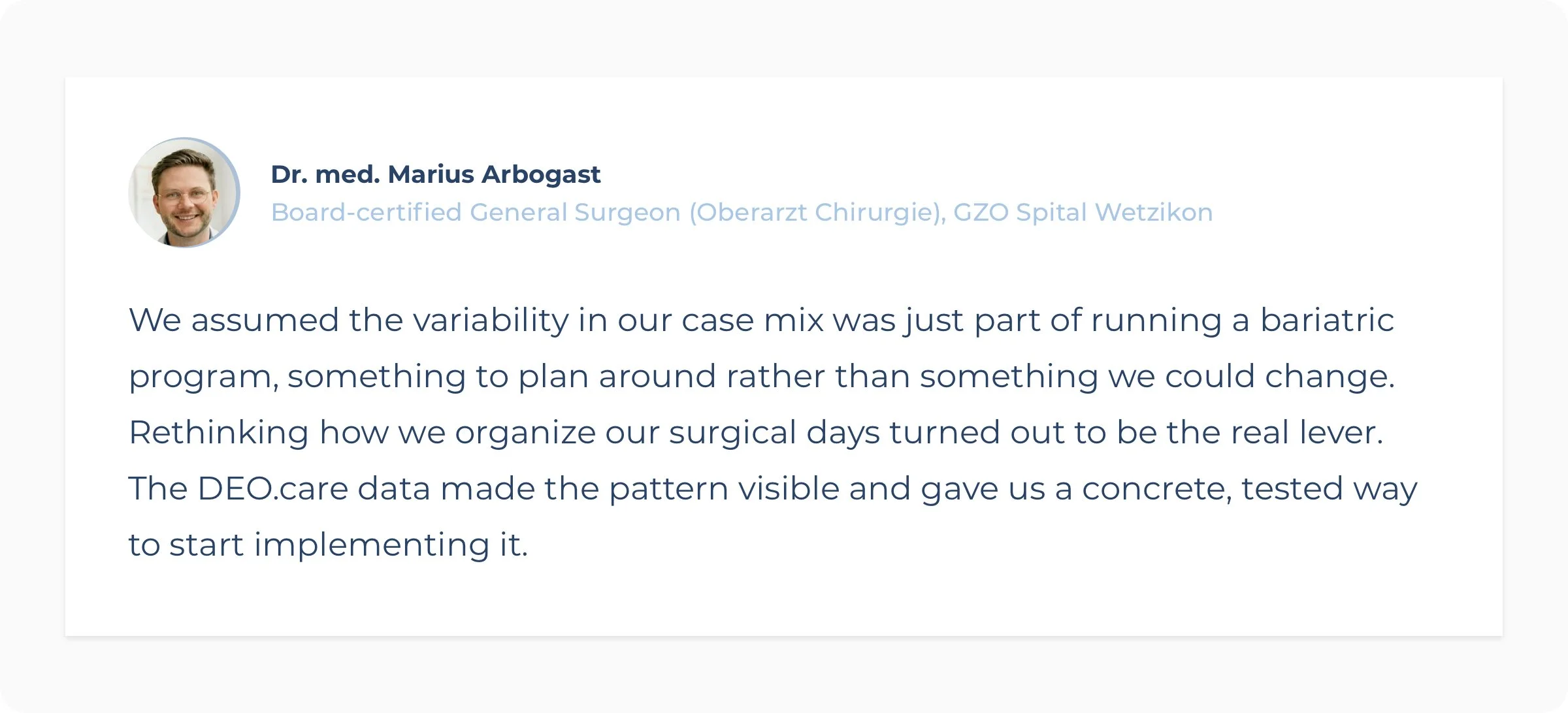
A blueprint for planning the day around procedure complexity
At GZO Spital Wetzikon, the review identified case mix as an important factor in surgical predictability. The first dedicated sleeve gastrectomy day showed that grouping similar procedures can support more consistent workflows and an earlier finish.
For this experienced surgical team, the opportunity was not to work harder, but to organize the day differently while maintaining the same number of patients.
For teams managing a similarly varied bariatric caseload, the experience offers a practical starting point: examine how procedures are grouped when reviewing the efficiency and predictability of the surgical day.