Dr. Miguel Afonso, Portugal: A proven workflow for a new clinic
As Dr. Miguel Afonso prepared to open a new private clinic, the Gastroclinic, he worked with DEO.care to develop and test the new clinic’s workflow in his existing OR at his general hospital, Clínica de Beloura. The team measured the endoscopic sleeve gastroplasty (ESG) process workflow, tested changes in a digital twin, and demonstrated the redesign in practice before transferring it to the new clinic.
Turnover decreased from 37 to 17 minutes and total case duration from 89 to 67 minutes, creating capacity for four ESG procedures instead of three within the same operating hours. Gastroclinic opened with a proven workflow and was able to run four procedures per day from the start.
Designing the workflow before opening the doors
Dr. Miguel Afonso specializes in endoscopic treatments for obesity, including ESG. As demand grew and he prepared to open Gastroclinic, a dedicated private clinic, he had an opportunity to decide not only what the new facility would look like, but how it should work.
Dr. Afonso used his existing OR at Clínica de Beloura as a testing ground. Working with DEO.care, the team measured the current ESG workflow, identified opportunities for improvement, and used a digital twin to test a redesigned way of working before implementing it in practice.
Measuring the existing workflow
DEO.care measured ESG cases at Clinica de Beloura, capturing each activity from patient and material preparation through surgery, closure, breakdown and turnover. The workflow data showed that the main opportunities were outside the procedure itself:
Patient preparation: Patient flow and material flow were not synchronised: late patient arrivals and variability in pre-anaesthesia meant that preparation steps waited on each other rather than running side by side.
Turnover: The interval between one patient leaving and the next entering was 37 minutes, shaped by how cleaning activities and tasks were allocated across the team in that window.
At baseline, the team completed three ESG procedures within the operating window.
Testing changes with a digital twin
DEO.care created a digital twin of the operating day to test how proposed changes would affect the full schedule.
The redesigned workflow included doing activities in parallel during the preparation phase and simplified the turnover process. The simulation predicted a 15-minute turnover and showed that the operating window could accommodate a fourth ESG procedure without extending operating hours.
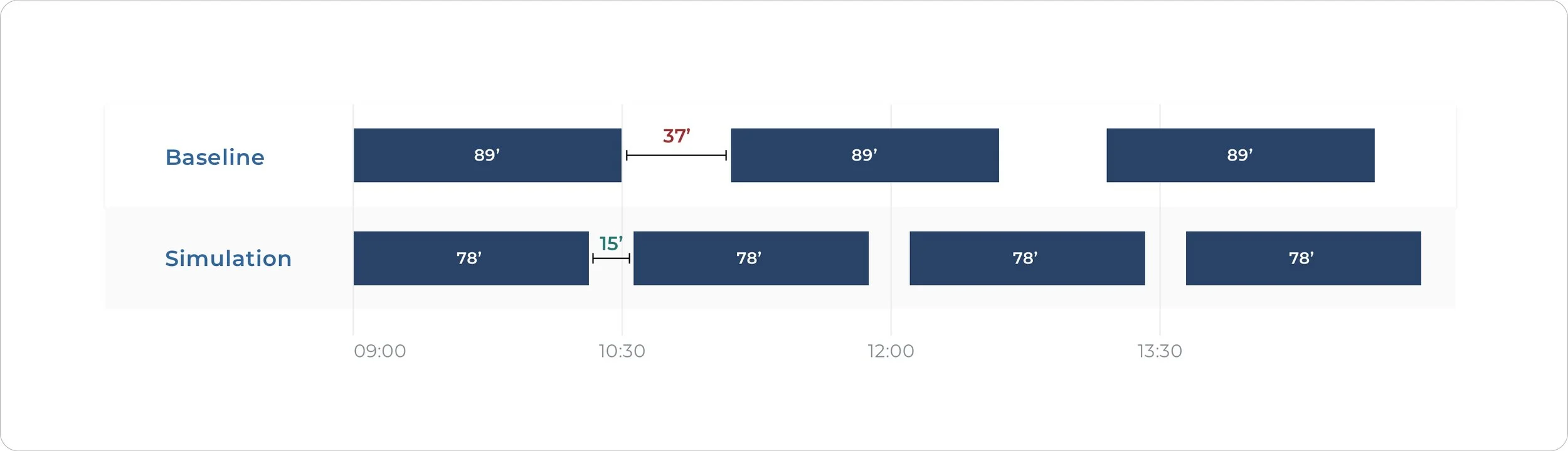
Figure 1. Baseline measurement and digital twin simulation of the ESG operating day at Clínica de Beloura.
Proving the redesign in practice
Dr. Afonso and his team implemented the redesigned workflow at Clínica de Beloura.
Patient and material preparation now ran in parallel, idle time between steps was reduced, and turnover fell from 37 to 17 minutes, a reduction of more than 50 percent. Total case duration decreased from 89 to 67 minutes (Figure 2).
The result was enough capacity for a fourth ESG procedure within the existing operating window, allowing Dr. Afonso to treat one additional patient without adding operating hours.
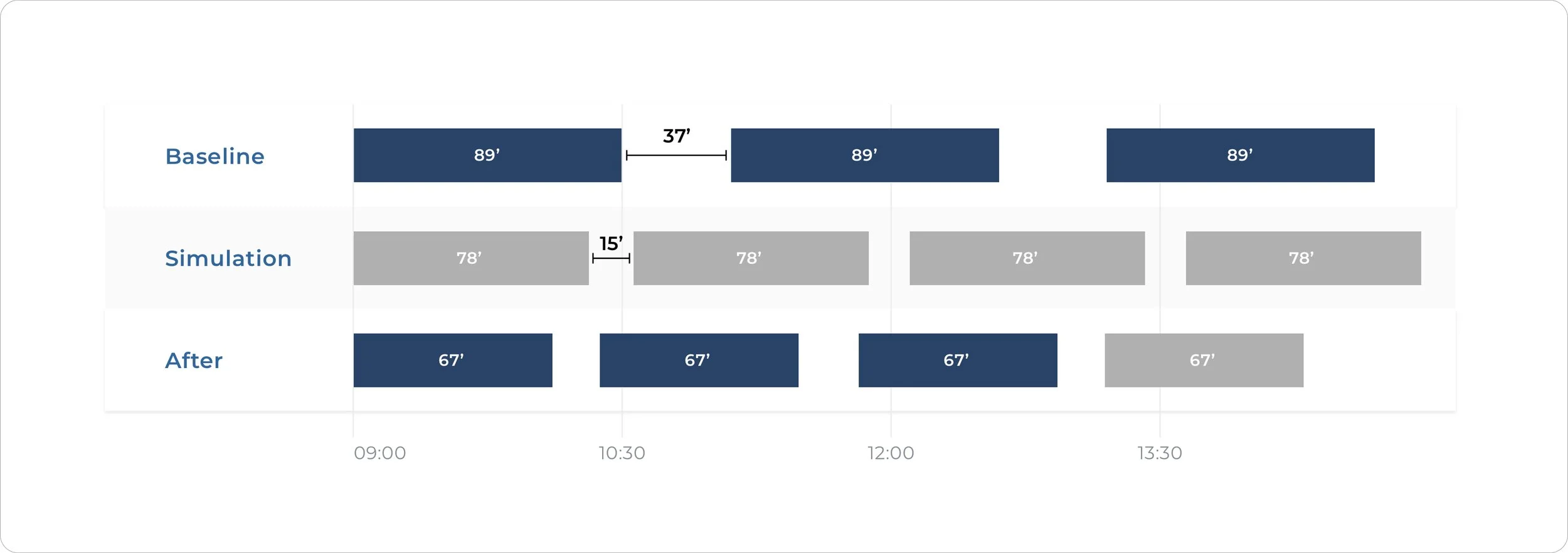
Figure shows the baseline OR day, the digital twin simulation day based on proposed changes and the average OR day after changes were implemented creating capacity for a fourth ESG procedure in the same window.
From a proven workflow to a new clinic
When Gastroclinic opened, Dr. Afonso could carry forward a workflow that had already been measured, optimized, and demonstrated in practice. Measurements at Gastroclinic showed that the workflow successfully transferred to the new setting, with the team able to run four procedures per day from the start.
Consistency improved as much as duration. For the team, this means a more predictable day: cases start and finish closer to plan, and the schedule no longer had to absorb large swings from one patient to the next.
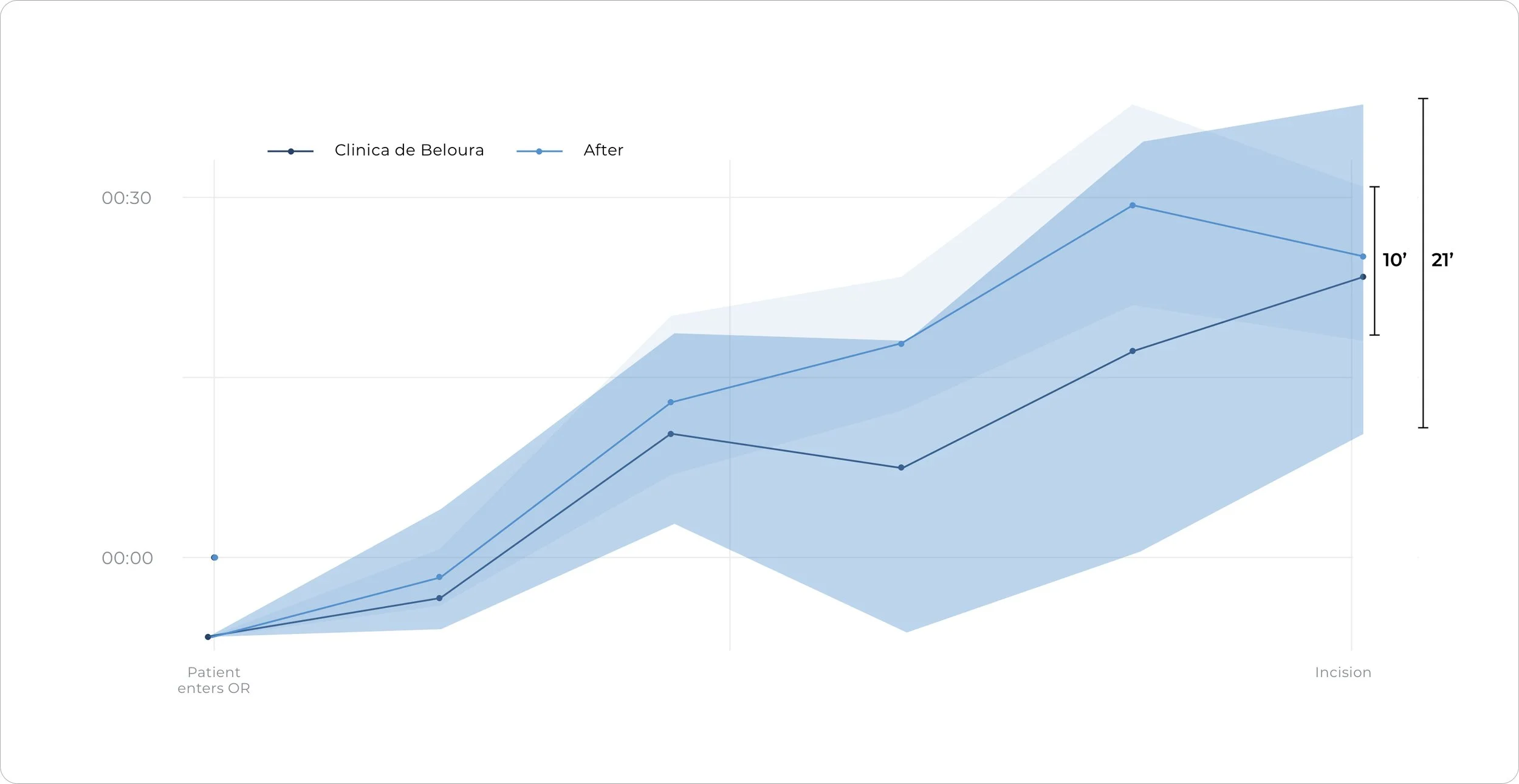
Figure shows the difference in procedure time variability between cases at Gastroclinic and Clinica De Beloura indicating a more consistent process at Gastroclinic.
Built to perform from day one
Opening Gastroclinic gave Dr. Afonso the opportunity to build a new operating model based on evidence from his own practice. By first measuring the existing workflow, testing potential changes in a digital twin, and proving the redesign in a live OR, the team could bring an established way of working into the new clinic.
Better coordination and less waiting between activities created capacity for four ESG procedures instead of three within the same operating hours, together with increased process consistency.