Prof. Dr. Christian Egloff, Switzerland: Sustainable implementation of robotic-assisted total knee arthroplasty
At Schulthess Klinik in Zurich, robotic-assisted knee surgery became part of daily practice within a highly structured, high-volume orthopedic environment.
Total knee arthroplasty is a standardized procedure. The operating room runs on predictability. Small inefficiencies accumulate quickly. Any new element introduced into that structure must be integrated without disturbing it.
As robotic-assisted knee surgery became routine, Prof. Dr. Christian Egloff wanted to better understand its broader impact.
Not only in terms of precision, but in terms of workflow, workload, and long-term sustainability.
Evaluating the entire workflow
To understand the real impact, Prof. Dr. Egloff evaluated robotic-assisted and conventional total knee arthroplasty under the same conditions. Ten consecutive primary TKAs were analyzed, five conventional and five robotic-assisted, all performed by the same experienced surgeon.
Using DEO.care’s process digital twin platform, the team mapped each step of the intraoperative workflow. Preparation times, surgical duration, and breakdown phases were measured objectively.
Mental and physical workload were assessed using NASA-TLX questionnaires. Ergonomics were evaluated using standardized RULA and REBA scoring systems. Even the total weight of instrumentation per procedure was calculated.
Stability without compromising efficiency
Operating room time is one of the most sensitive indicators of sustainability.
The results showed that operative times were closely aligned between conventional and robotic-assisted procedures. Preparation, surgical duration, and breakdown phases were comparable, confirming that robotic-assisted knee surgery could be integrated without materially affecting overall operating room efficiency or daily case flow.

In practical terms, this meant that daily surgical flow remained stable. Case numbers could be maintained. There was no structural need to extend operating hours or reduce throughput.
Robotic-assisted knee surgery fits into the existing schedule.
Impact on workload and ergonomics
Surgical sustainability depends on the people in the room as much as on the clock.
NASA-TLX assessments showed comparable levels of mental demand, physical demand, effort, and frustration between both techniques for the surgeon and scrub nurse. Once integrated, robotic-assisted procedures did not increase perceived cognitive load or stress.
The team experience remained consistent.
Where the difference became more apparent was in instrumentation and ergonomics.
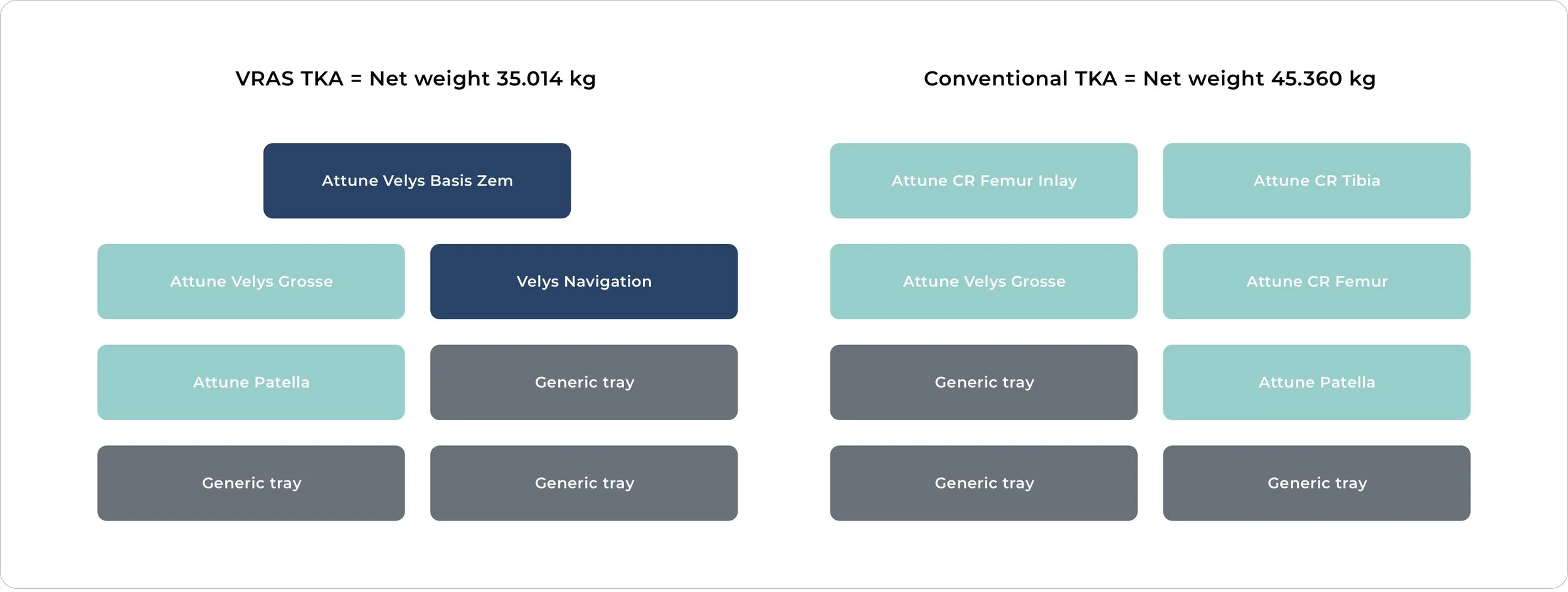
Conventional total knee arthroplasty required eight instrument trays. Robotic-assisted procedures required six, resulting in a net reduction of 10 kilograms per case.
For the nursing team, that translates directly into fewer lifts and reduced repetitive strain. In high-volume practice, this matters.
Ergonomic analysis further showed improved posture during key surgical steps. During tibial and distal femur cuts, RULA and REBA scores were lower in robotic-assisted procedures, indicating reduced musculoskeletal risk for the surgeon.
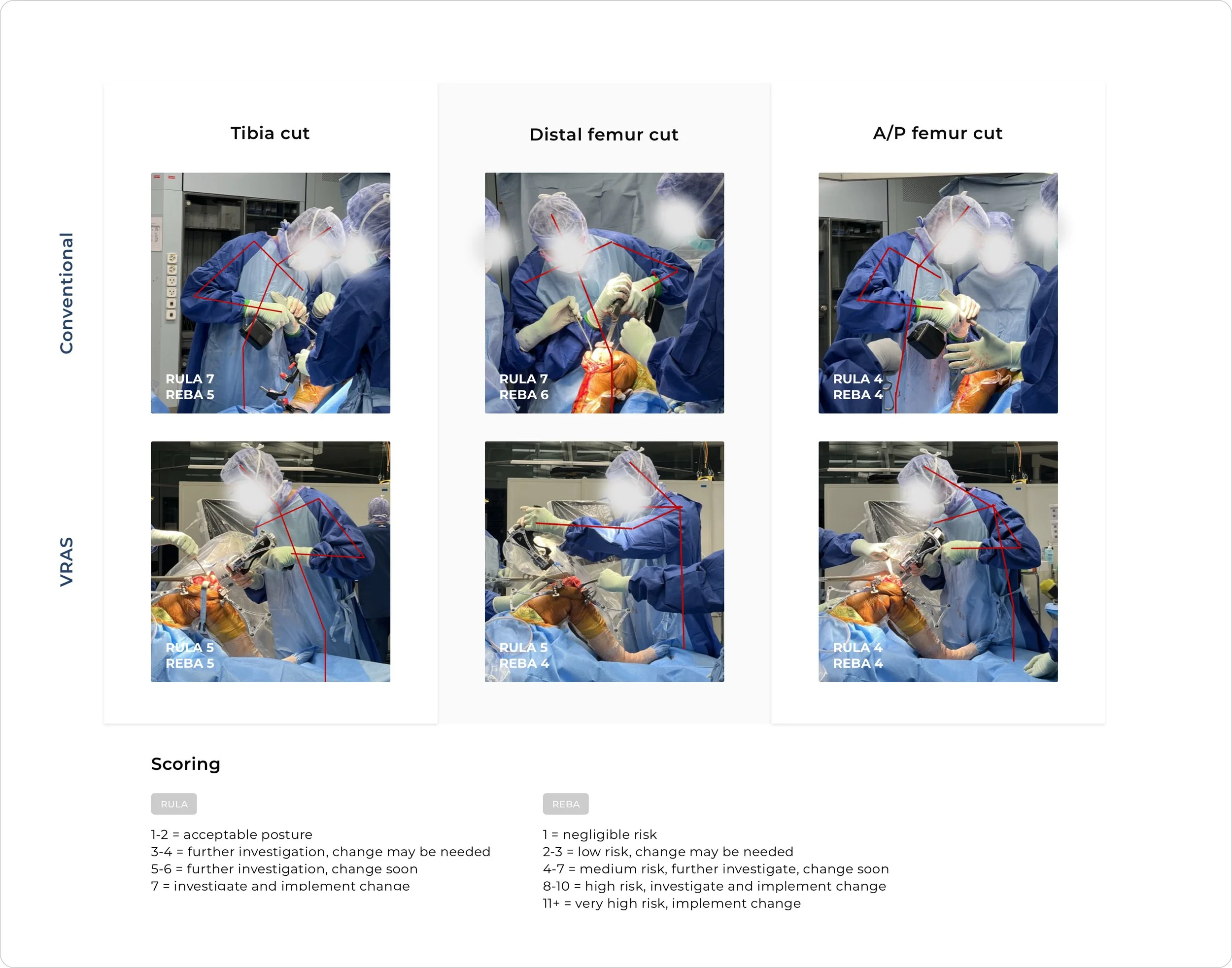
Orthopedic surgery is physically demanding. Improvements in posture and strain are not minor in detail; they are long-term considerations.
A balanced integration
The evaluation showed that robotic-assisted knee surgery could be implemented in a time-neutral manner, without increasing workload and while improving certain ergonomic parameters.
It did not require structural reorganization of the OR. It did not reduce daily surgical volume. Instead, it maintained operational stability while reducing physical strain.
For Prof. Dr. Egloff, that balance was decisive.
Prof. Dr. Egloff reflects
“Introducing new technology always requires careful evaluation. What mattered to us was whether it would integrate into our daily practice without creating inefficiencies or an additional burden for the team.
The data showed that we could maintain our workflow and case volume, while improving ergonomics and reducing physical strain. That combination makes robotic-assisted knee surgery a sustainable step forward.”
At Schulthess Klinik, the adoption of robotic-assisted knee surgery represents a measured evolution. One that preserves efficiency, supports the surgical team, and aligns precision with practical sustainability.